Safe Ways to Involve Your Kids in Cleaning
As a mom of toddlers, I know how messy little ones can be. I think most parents have daydreamed of the moment our kids can start to help clean up the chaos they create. But when is that, exactly? It may be sooner than you think.
Involving kids in cleaning early builds responsibility, confidence, and lifelong habits like focus and teamwork. Research shows it boosts executive function, self-esteem, and even future success by making chores feel natural, not forced.
When is a child old enough to help with chores?
It depends. The breakdown in the next section associates certain tasks with certain age groups to give you a helpful starting point, but it is important to understand that every child is different. They learn and grow at their own pace. Rather than determining their readiness based on age alone, watch for observable behaviors and developmental milestones, like:
Behavioral
- Shows strong interest in imitating adult tasks, like grabbing a sponge when you wipe counters or pushing a toy vacuum.
- Expresses independence with phrases like “me do it!” or insists on trying to help pour water or dress themselves.
- Handles basic motor skills, such as picking up toys, stacking blocks, or carrying light items without frequent dropping.
Developmental
- Follows simple one- or two-step instructions with reminders, like “put your toys in away.”
- Demonstrates enough attention span for short tasks (5-10 minutes) and feels pride in completion.
- Understands basic routines and responds well to praise for effort, not perfection.
If your child is eager to help, hand them a damp washcloth. If their eyes light up and they keep at it (even if it isn’t perfect), that’s a good sign.
Age-Appropriate Chores for Toddlers to Teens
These activities are clustered around what little ones typically handle well at each phase. Think of them as starting points you adapt to fit your child. This keeps things safe, helps with skill building and makes them feel proud of contributing.
Ages 2–3: Toddlers
Toddlers can “help” in tiny, concrete ways with lots of supervision. Tasks are mostly about copying you and learning basic habits.
Tasks:
- Put toys and books into a bin or on a shelf
- Put dirty clothes in a hamper
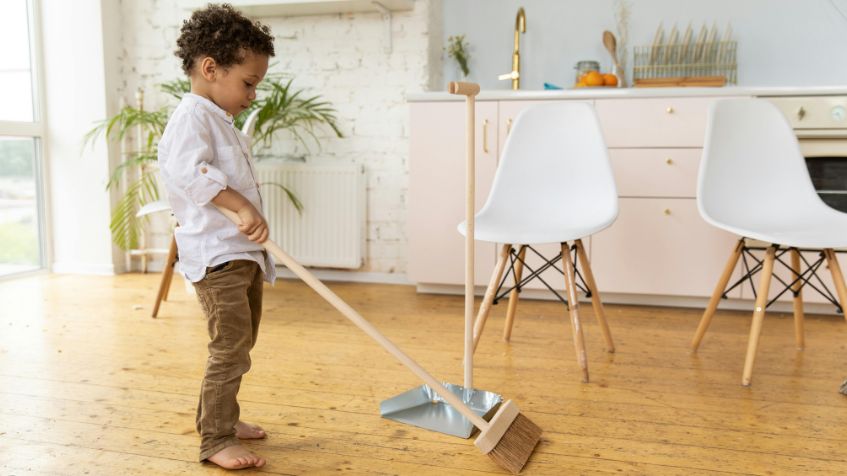
- Wipe low surfaces or baseboards with a cloth or sock on their hand
- Help wipe small spills
- Carry light items to the trash or laundry basket
Keeping it fun (songs, races, “can you find all the blue toys?”) is key.
Ages 4–5: Preschoolers
Preschoolers can follow simple multi-step directions and start to take ownership of “their” areas.
Tasks:
- Make their bed (loose version is fine)
- Clear their dishes or help clear the table
- Help wash plastic dishes or load utensils into the dishwasher
- Sort laundry (lights/darks, matching socks)
- Water plants with a small watering can
- Wipe the table, counters, or cabinet fronts
- Put away toys, books, and shoes in designated spots
Checklists or picture charts work well here to remind them what to do without constant prompting.
Ages 6–9: Early elementary
Kids this age can handle more detailed chores and some basic responsibility for shared spaces.
Tasks:
- Sweep or vacuum smaller areas
- Put away their clean laundry and keep their room tidy
- Empty small trash cans into a larger bin
- Help load and unload the dishwasher
- Help put away groceries
- Help with simple meal prep like stirring, tearing lettuce, or assembling sandwiches
Rotating them through a few different jobs each week builds a broader skill set and keeps boredom down.
Ages 10–13: Tweens
Tweens can manage more complex tasks and start to take full responsibility for some routines.
Tasks:
- Vacuum or mop larger areas
- Do their own laundry, start to finish, with some supervision at first
- Prepare simple meals or sides
- Clean bathrooms with safe products (sink, mirror, counters)
- Take out trash and recycling
- Help with seasonal jobs like raking leaves or shoveling light snow
This is also a good stage to tie chores to time management skills (planning when to do weekly jobs).
Ages 14+: Teens
Teens can handle most adult-level household tasks and can help with planning as well as execution.
Tasks:
- Full laundry responsibility
- Regular meal planning and cooking for the family
- Deeper cleaning like ovens, fridges, or detailed bathroom cleaning
- Yard work, basic car cleaning, and simple errands
- Helping manage grocery lists and shopping
Chores here are about independence and life skills.
Safety First: Minimizing Everyday Risks
Little helpers mean little hands reaching for everything, so make sure you are supervising and keep an eye on what products are nearby. Many common cleaning products are made with harsh chemicals that can irritate skin, eyes, or lungs — especially risky when toddlers “taste-test” or preschoolers spray wildly.
Keep them safe by seeking out non-toxic, plant-based cleaners that are safe to use around the whole family. Cleaning Mama’s all-natural products, for example, offer the same performance as traditional solutions without harsh, synthetic ingredients.
Early Cleaning Habits are a Win-Win
Starting chores young builds lifelong habits of responsibility and teamwork, while boosting confidence through those first “I did it!” moments. Plus, it helps turn those solo clean-up marathons into family rhythms.
Kid Safe, Mama Approved: Shop the Fresh Scent Range