
Natural Cleaning Ingredients
Natural Cleaning That Works: What Essential Oils Actually Do in Cleaning Products
Many people underestimate the power of natural ingredients, especially when it comes to cleaning products, but I’ve learned that effective doesn’t have to mean harsh. Strength and gentleness can coexist in the same bottle.
I began developing the Cleaning Mama Fresh Scent range because major household brands simply did not offer the kind of solution I needed: a cleaner that worked well, used ingredients I felt comfortable bringing into my home and smelled fresh without relying on heavy synthetic fragrance.
The important part, though, is understanding what essential oils actually do in a cleaning formula — and what they don’t.
Do essential oils actually clean?
Essential oils are not complete household cleaners on their own. In a well-formulated cleaning product, they can contribute scent and other formulation characteristics, while ingredients such as surfactants do much of the work of loosening oil, dirt and grime so it can be wiped or rinsed away.
That is why the finished formula matters more than any single ingredient. A cleaner needs the right combination of ingredients, concentrations and surface compatibility to work as intended.
What Are Essential Oils?
Essential oils are concentrated aromatic compounds extracted from plant materials such as leaves, flowers, peels, seeds, bark or roots. Different oils have different scent profiles and chemical compositions, which is one reason they are used in fragrance, personal care and household products.
They are also highly concentrated. That matters. More is not automatically better, and pouring undiluted essential oil directly onto a countertop, floor or other household surface is not the same thing as cleaning it.
It’s All in the Mix
Opening a bottle of essential oil and pouring it onto a surface will not create a balanced cleaning formula. Essential oils can irritate skin, stain or damage certain materials and behave unpredictably when they are used at the wrong concentration.
In a finished cleaner, every ingredient has a job. Surfactants help loosen grime. Water acts as a carrier. Other ingredients support pH, stability, texture or surface compatibility. Essential oils contribute scent and help shape the sensory experience of the product.
If you want a deeper look at the ingredient doing much of the actual lifting, read What Is a Surfactant?
Cleaning performance
Comes from the complete formula, including surfactants and other functional ingredients designed to loosen and remove everyday soil.
Scent experience
Essential oils can create bright, herbal, floral, woody or calming scent profiles without relying on synthetic fragrance.
Surface compatibility
The right formula depends on what you are cleaning. A stone cleaner, floor cleaner and all-purpose spray do not need identical chemistry.
Meet Cleaning Mama’s Fresh Scent Blends
When I develop a formula, I think about the person using it: how it will smell when it’s sprayed, how the product fits into their routine and how the space will feel when they are done cleaning it. Every ingredient has a purpose.
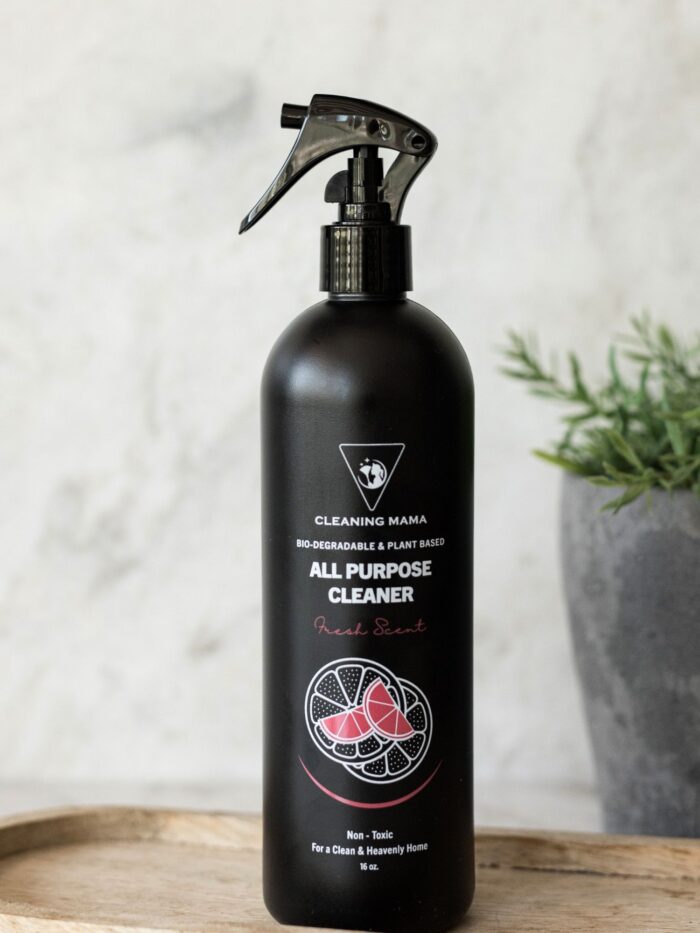
All Purpose Cleaner
Cleaning Mama’s All Purpose Cleaner combines distilled water and aloe vera extract with plant-derived surfactants that help lift everyday dirt and grime without leaving surfaces feeling coated.
Grapefruit gives the blend a bright citrus opening, lavender softens it and cedarwood adds a warmer, grounded finish. Together, they create a scent that feels fresh without smelling like a traditional chemical cleaner.
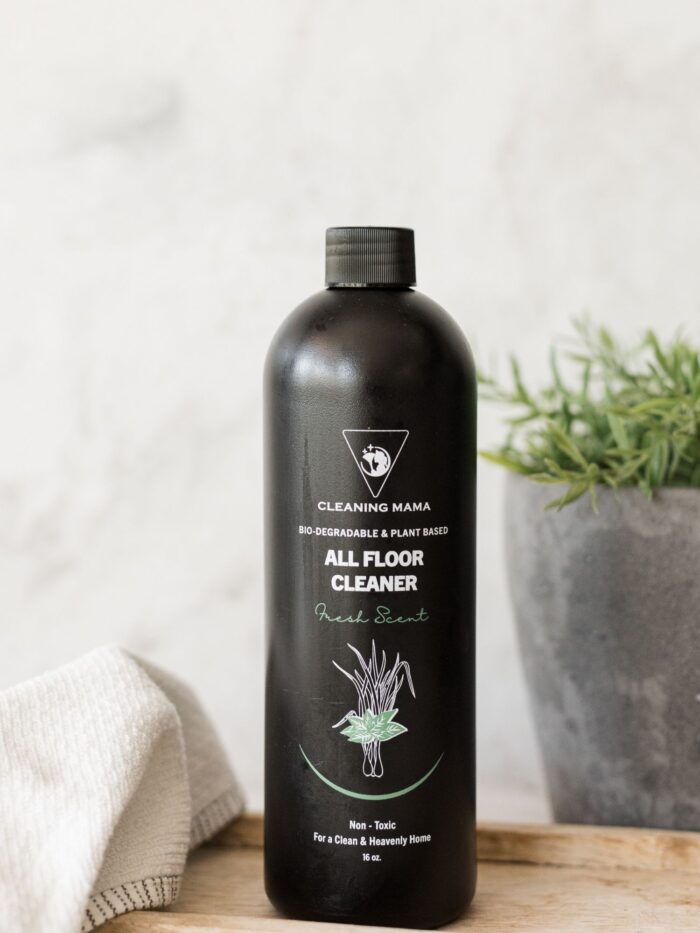
All Floor Cleaner
Cleaning Mama’s All Floor Cleaner is designed for everyday floor care across compatible surfaces including wood, tile, laminate and stone.
Tea tree gives the scent a crisp herbal character, lemongrass adds a fresh citrus edge and vetiver brings in an earthy base. The result smells clean and grounded without overwhelming the room.
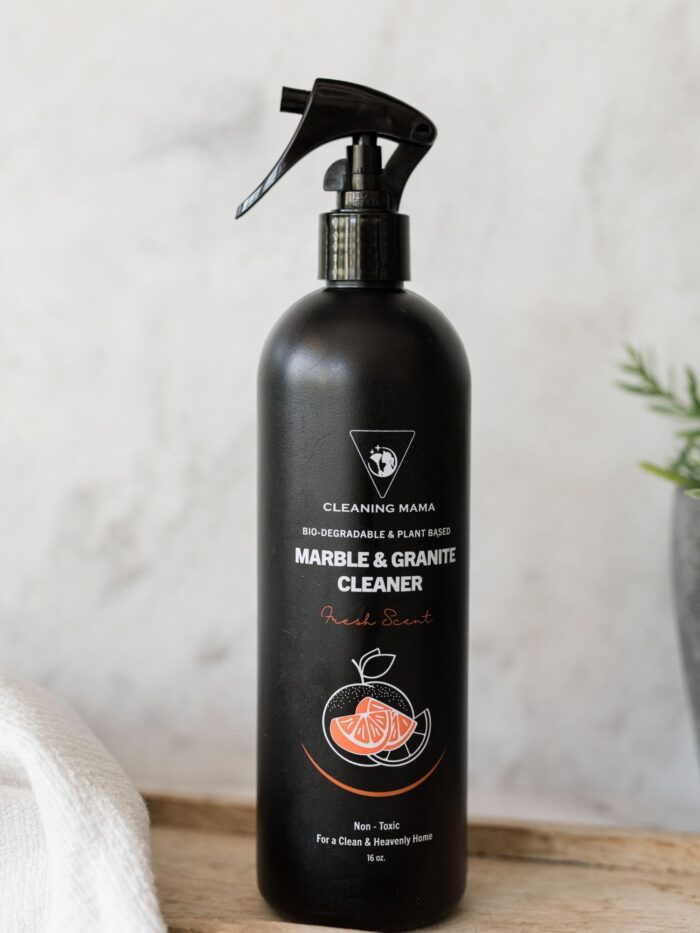
Marble & Granite Cleaner
Natural stone needs its own kind of care. Cleaning Mama’s Marble & Granite Cleaner is formulated specifically for sealed stone surfaces rather than asking one all-purpose formula to do every job.
Sweet orange gives the blend a warm citrus note, rose geranium adds a soft floral layer and vanilla absolute rounds everything out with a subtle warmth.
What Essential Oil Matches Your Cleaning Style?
Your home has a personality, and so does the way you clean it. Answer eight quick questions to see which Fresh Scent essential oil best matches your habits and scent preferences.
1. What do you most want your home to feel like after you clean?
2. Which space do you care about keeping clean the most?
3. What is your cleaning style?
4. Pick the scent description that sounds most like you.
5. Your home is most often...
6. What is your biggest cleaning frustration?
7. What kind of cleaner are you most likely to reach for first?
8. Choose your ideal cleaning moment.
This quiz is just for fun and reflects scent and cleaning-style preferences, not product safety or performance requirements.
How to Choose a Naturally Scented Cleaner
Scent matters, but it should not be the only thing you look at. A cleaner still needs to make sense for the surface, the job and the way your household uses it.
- Start with the surface. Natural stone, floors and everyday hard surfaces may need different formulas.
- Read the full ingredient list. “Natural” on the front of a bottle tells you less than a transparent ingredient disclosure.
- Know what creates the scent. Naturally scented and fragrance-free are not the same thing.
- Follow the directions. More cleaner or more essential oil does not necessarily mean a better clean.
- Think about your household. Scent preferences and sensitivities vary, so choose a formula that works for the people sharing the space.
Clean That Feels Like Care
For me, natural cleaning is not about pretending that one plant ingredient does everything. It is about building a thoughtful formula where every ingredient has a clear job.
That means using the right surfactants to clean, the right formulation for the surface and scent combinations that make the routine feel a little more enjoyable.
When a cleaner works well and smells like something you actually want in your home, cleaning feels less like a battle with the mess and more like part of taking care of the space you live in.
Essential Oils in Cleaning FAQs
What are essential oils?
Essential oils are concentrated aromatic compounds extracted from plant materials such as leaves, flowers, peels, seeds, bark or roots. Their scent and chemical composition vary depending on the plant and extraction method.
Do essential oils clean surfaces?
Essential oils are not complete household cleaners on their own. In a finished cleaning product, cleaning performance comes from the complete formula, including ingredients such as surfactants that help loosen and remove dirt and oils.
Are essential oils disinfectants?
Not automatically. A household product must meet specific regulatory and labeling requirements to be sold as a disinfectant. A naturally scented everyday cleaner should not be assumed to disinfect simply because it contains an essential oil.
Why are essential oils used in cleaning products?
Essential oils can contribute natural scent and help create the overall sensory profile of a cleaning product. Their role depends on the complete formulation and the concentration in which they are used.
Can I put essential oils directly on counters or floors?
It is better not to assume an undiluted essential oil is safe for a household surface. Essential oils are concentrated and can stain, dull or otherwise affect some materials. Use a properly formulated cleaner that is appropriate for the surface and follow its directions.
Which essential oils are in Cleaning Mama products?
Cleaning Mama’s Fresh Scent formulas use different blends. All Purpose Cleaner includes grapefruit, lavender and cedarwood. All Floor Cleaner includes tea tree, lemongrass and vetiver. Marble & Granite Cleaner includes sweet orange, rose geranium and vanilla absolute.
Are naturally scented cleaners fragrance-free?
No. “Naturally scented” means the product has a scent derived from ingredients such as essential oils or botanical extracts. “Fragrance-free” means fragrance ingredients are not intentionally added. Those are different claims.
Do natural cleaning products work as well as conventional cleaners?
They can. Cleaning performance depends on the complete formulation, concentration and intended use rather than whether a product is described as natural or conventional. The right cleaner should be chosen for the surface and the job.
Essential oils are concentrated ingredients. Always follow product directions and surface-care instructions rather than applying undiluted essential oils directly to household surfaces.